

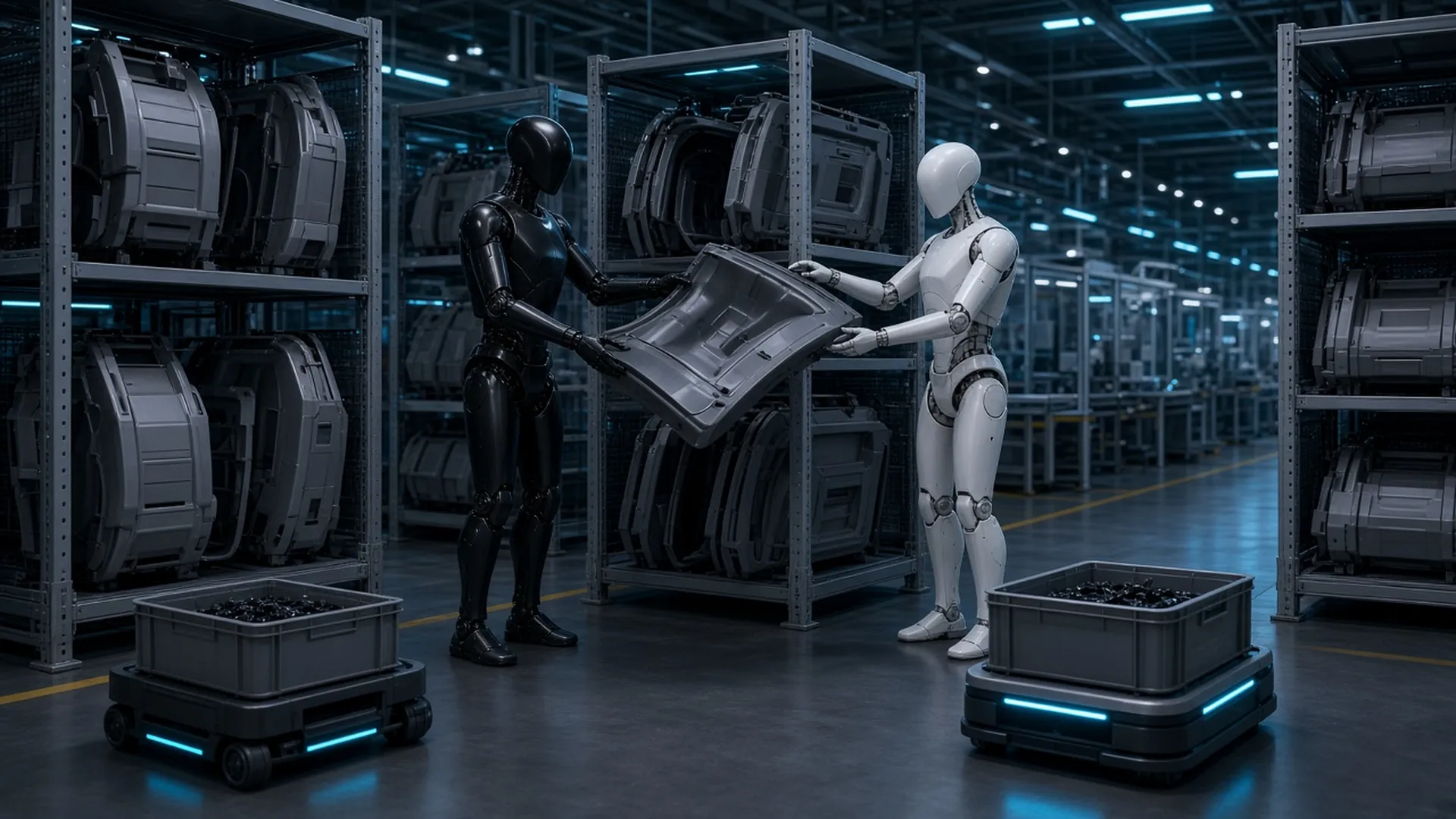
Xiaomi has released footage of its humanoid robots working a full eight-hour shift inside its electric car factory, one of the longest publicly documented runs by humanoids on a real production line.
The video, posted by Xiaomi Tech on X on November 3, shows the robots at the factory’s center console side-cover sorting station. They pull large, flexible interior panels out of bins, turn them the right way round and slot them into storage racks in the order the cars on the line need them. Electrek and The Gadgeteer both describe the same job and the same video.
What Xiaomi claims
According to Xiaomi, the robots covered a full day of production at that workstation, detected and corrected anomalies on their own, and coordinated with the production line’s control system. The company called it “another step toward real-world industrial deployment.”
The public cut runs about six minutes and carries an “Autonomous, 100x Speed” label, so the footage is heavily sped up. The Gadgeteer, citing a report by Chinese outlet CLS, says two humanoids (reportedly the CyberOne 02 model) worked the station and that the video’s cumulative counter shows two charging breaks, at about 3 hours 2 minutes and 6 hours 3 minutes. Xiaomi itself has not explained how the robots stayed powered through the shift.
In one scene, a robot reportedly drops a panel and a wheeled humanoid rolls in to help. Both outlets point out that wheeled mobile robots also shuttle the parts bins around the station.
The numbers that are missing
Xiaomi did not publish how many parts were sorted, the success rate over the eight hours, or how often a human had to step in. That gap matters, because “autonomous” in a robot video can mean many things.
To be fair, Xiaomi has shared real figures before. In March, a humanoid working as an “intern” at a self-tapping nut station reached a 90.2% success rate over three hours, fast enough for the station’s 76-second cycle time. By July, Xiaomi said that rate had risen to 98%. Those figures describe earlier tests at a different station, not this run.
Why it matters
Most humanoid demos last minutes. An eight-hour run with the charging breaks left in is a step toward the question factories actually ask: can a robot cover a shift? Xiaomi CEO Lei Jun has said the company plans to deploy humanoids in large numbers across its factories within five years.
Until Xiaomi publishes a part count, a success rate and an intervention log for this run, the fair reading is progress, not proof.