

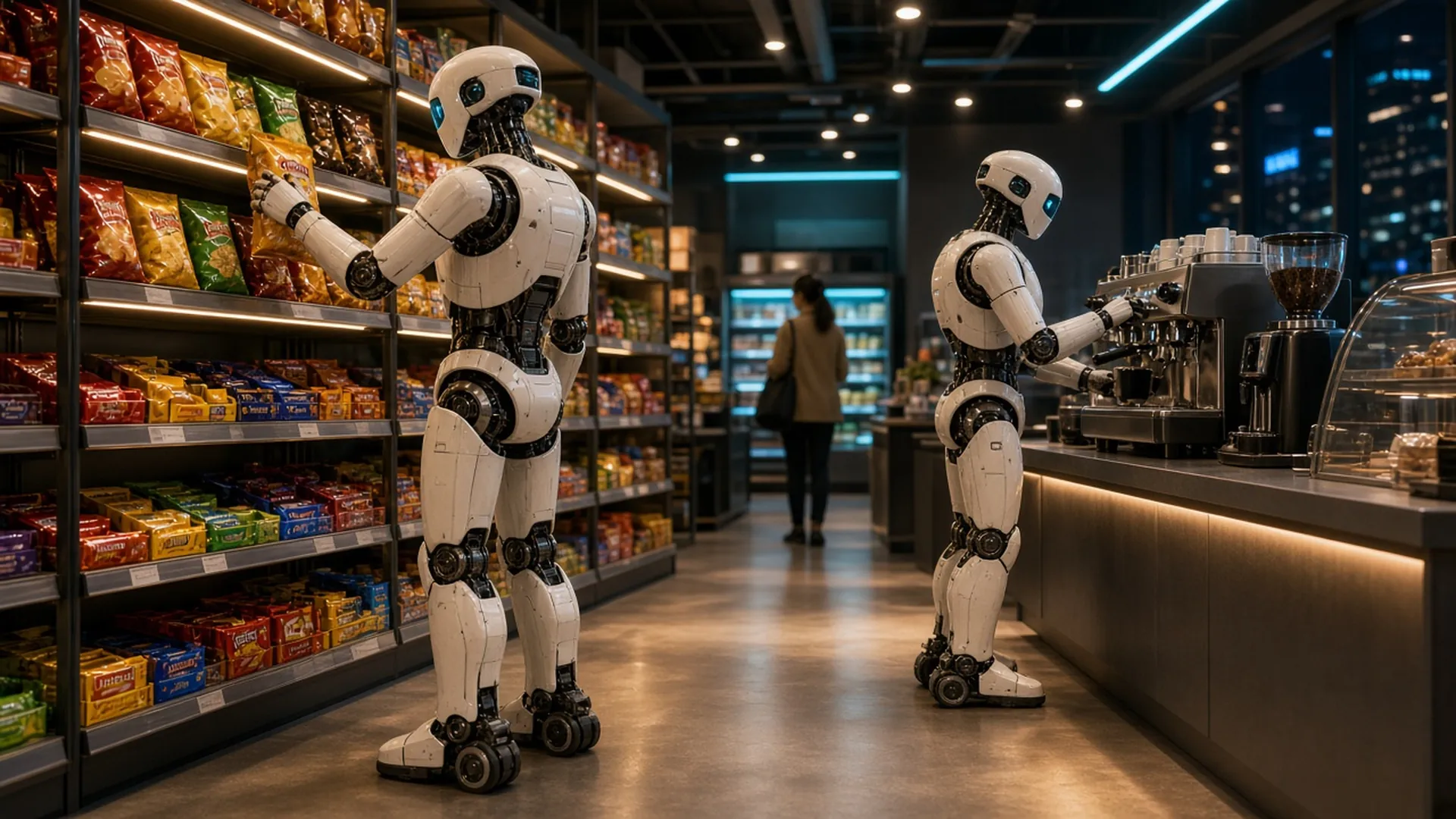
Chinese robot maker AgiBot has put six of its G2 robots to work in a real convenience store for 24 hours, and broadcast the whole thing live.
The challenge, called “Robots Never Clock Out,” ran from 10:00 on November 2 to 10:00 on November 3 China time, according to Interesting Engineering and Humanoids Daily. TechSpot places the store in Shanghai’s Xuhui district.
Four shifts, six jobs
AgiBot split the day into four periods: the lunch rush, the evening rush, late-night duty and breakfast preparation. The robots’ jobs included stocking and organising shelves, making coffee and hot food, greeting customers and clearing rubbish, all while real shoppers moved around them.
The results
By AgiBot’s count, reported by TechSpot and Poland’s Chip.pl, the six robots completed 1,730 tasks, including 683 customer greetings, 369 item retrievals and deliveries, and 147 coffees.
But only four of the six passed the company’s assessment. The shelf-patrol robot reportedly could not keep up with the store’s turnover, and the cleaning robot, on night duty, met a full bin, left its route and wandered out of the store, according to TechSpot, which cites ITHome.
Chip.pl adds useful context: almost 40% of the logged tasks were greetings and customer service, which are much easier than physically grabbing products.