

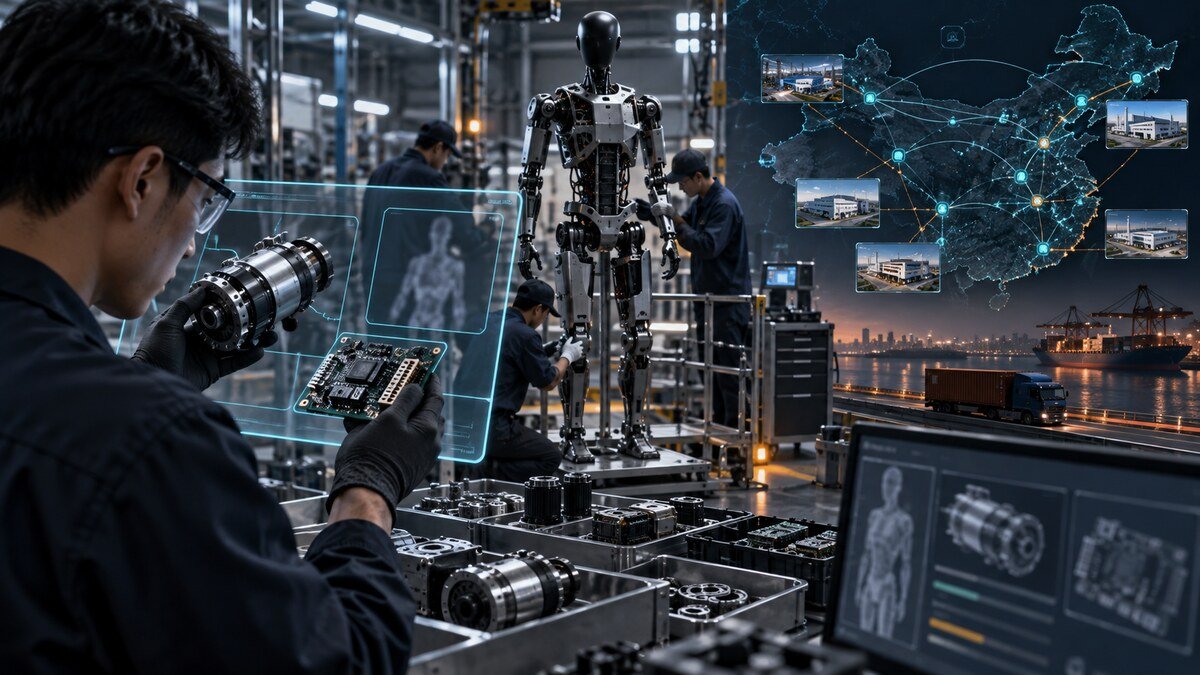
Tesla’s Optimus program may be designed around a humanoid robot assembled in the United States, but China’s manufacturing ecosystem is likely to remain important to the project.
The difficult part is separating confirmed supply-chain relationships from reports about future production plans.
A September 18 report by the South China Morning Post said Tesla officials and engineers had begun auditing part of the company’s Chinese supplier network as Tesla prepares to increase Optimus production.
The report named companies including Zhejiang Sanhua Intelligent Controls, Ningbo Joyson Electronic and Tuopu Group.
But Chinese business publication Yicai reported the same day that some suppliers said they had no knowledge of a new Optimus-related factory inspection.
Tesla did not confirm the reported audit.
That leaves the central story in an unusual position.
Tesla’s dependence on Chinese component expertise is broadly credible and has been reported for months.
The specific claim that a new audit round has begun remains disputed.
China already matters to Optimus
Tesla has spent years developing relationships with Chinese automotive suppliers.
That is important because a humanoid robot uses many technologies that overlap with advanced vehicle manufacturing.
These include:
- electric motors
- power electronics
- thermal management
- precision machining
- sensors
- batteries
- actuators
- high-volume manufacturing
Many Chinese companies already know Tesla’s engineering processes and quality requirements from the electric-vehicle business.
That creates a natural starting point as Tesla builds a supply chain for Optimus.
Earlier reporting has described Chinese suppliers working with Tesla on robot components and prototype parts.
The broader supply-chain relationship therefore does not depend on the latest audit report being correct.
What the new report claims
The South China Morning Post reported, citing sources familiar with the matter, that Tesla teams were examining manufacturers in eastern China as potential Optimus suppliers.
Supplier audits are normal in manufacturing.
Customers evaluate production quality, capacity, process control, compliance and the supplier’s ability to meet expected volumes.
If Tesla is preparing to increase Optimus production, deeper reviews of potential suppliers would be unsurprising.
But the specific reports have not been fully confirmed.
Suppliers push back
Yicai contacted companies mentioned in the circulating reports.
A representative for Tuopu Group said the company had not received notification of a new factory inspection by Tesla.
Other suppliers similarly did not confirm the reported round of audits.
Tesla did not respond publicly to Yicai’s questions about the matter.
That does not prove an audit is not happening.
Large manufacturers can interact with suppliers through different teams, and individual company representatives may not always have full visibility into customer activity.
But it means the strongest version of the claim cannot currently be presented as established fact.
For RoviVox, the correct framing is therefore:
reports say a new audit is under way, while suppliers and Tesla have not independently confirmed it.
Optimus will require manufacturing at a different scale
Building a humanoid prototype is one problem.
Building tens of thousands of robots with consistent quality is another.
A commercial humanoid contains many precision components operating under heavy mechanical load.
Actuators must work reliably.
Joints must be repeatable.
Hands require complex mechanical and sensing systems.
Thermal control, batteries and electronics need to fit inside a compact body.
Tesla’s experience with electric vehicles gives it manufacturing expertise, but humanoids create a different supply-chain challenge.
The company needs components optimized for movement and manipulation rather than road transportation.
That is one reason supplier collaboration is likely to become increasingly important.
China has one of the deepest robotics supply chains
China is currently one of the strongest manufacturing environments for humanoid components.
Domestic robot companies are already creating demand for actuators, motors, sensors, dexterous hands and other specialized hardware.
As Chinese suppliers expand production, foreign humanoid companies may benefit from the same ecosystem.
That creates an interesting tension for Tesla.
Optimus is central to Tesla’s long-term technology strategy, and the company has emphasized manufacturing in the United States.
But achieving low component costs may still require extensive interaction with Chinese suppliers.
The final balance between U.S. manufacturing and Chinese components remains to be seen.
Why unconfirmed reports move markets
Robotics has become one of the most heavily watched technology sectors.
A report that a major company has selected a supplier can rapidly move the supplier’s share price.
Yicai reported that shares in some Chinese companies initially rose following the Optimus audit story before giving back part of those gains after the companies said they had no knowledge of the inspections.
That illustrates a broader problem.
Humanoid robotics is developing so quickly that investors often react before commercial relationships are fully documented.
Companies, journalists and investors therefore need to distinguish:
- confirmed contracts
- prototype cooperation
- supplier qualification
- factory audits
- market rumors
Those stages can have very different commercial meaning.
RoviVox View
Tesla’s Chinese supply chain is an important story even without a confirmed new audit.
The global humanoid race is not only a competition between robot brands.
It is also a competition between manufacturing ecosystems.
The companies that can access reliable, high-volume components at lower cost will have a significant advantage when humanoid production begins scaling.
China already has much of that infrastructure.
But the latest Optimus audit report is also a useful reminder that robotics hype can move faster than verified information.
Until Tesla or the suppliers provide clearer confirmation, the responsible conclusion is simple:
the supply chain is taking shape, but the reported new audit round should still be treated as unconfirmed.