
Boston Dynamics Rebuilds Stretch Around 100,000 Hours of Real Warehouse Work

Stretch Gen 2 cuts internal cabling by 81% and turns a day-long drive swap into a one-hour job, using lessons from 100,000+ operating hours.

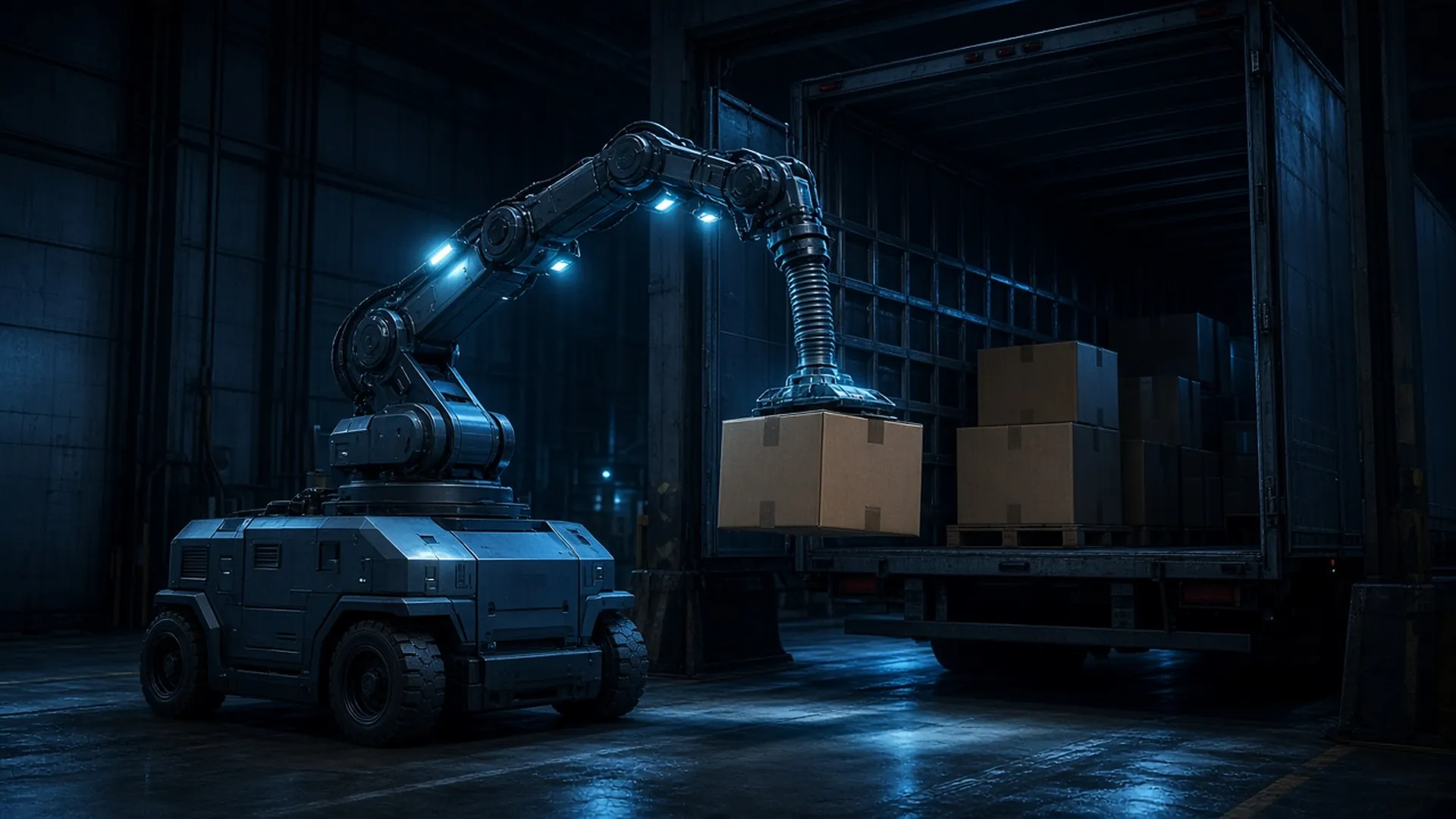
Editorial illustration of a mobile robot arm unloading boxes from the back of a dark truck trailer.
AI-generated Rovivox illustration, not a photo of Stretch.

Boston Dynamics has unveiled Stretch Gen 2, the second generation of its trailer-unloading robot, and almost every change is about one thing: keeping the robot working.

The company announced the robot on November 3. It says the redesign is based on data from more than 100,000 operating hours and tens of millions of boxes unloaded by the first Stretch, used to find the most common causes of unplanned downtime (Boston Dynamics, Interesting Engineering).

Fewer wires, fewer faults
The biggest change is inside. Stretch Gen 2 has 81% less internal cabling, about half a mile of it, which Boston Dynamics calls the biggest source of intermittent electrical faults. It also uses automotive-grade connectors to handle vibration, an upgraded gripper with new valves and finer sensing, and joints that rotate continuously instead of hitting hard stops.

Small details matter too. The emergency stop now sits lower and is recessed, and new panel materials make it less likely that a falling box trips a safety stop or cracks a panel.

A day-long repair becomes an hour
When something does break, fixing it should be faster. A full swerve-drive swap, the wheel unit that moves the robot, now takes about one hour instead of a full day, the company says. Dynamic cables and complex harnesses are gone, fasteners are standardised, and new onboard diagnostics let a customer’s own maintenance team do more routine service.

The specs
By Boston Dynamics’ figures, Stretch Gen 2 unloads up to 1,000 cases per hour, a rate the company says depends heavily on box weight and how neatly the load is stacked. The battery lasts two shifts and a fast charger reaches 90% in about 75 minutes. Onboard lighting lets it work in dark trailers. No price was announced.

Why it matters
This is what a robot looks like after years in real warehouses rather than on a demo stage. As industry newsletter MillBrief notes, a second generation built around cabling, connectors and hard stops tells buyers what failed in the first one. For anyone buying robots, the useful questions are the same: what breaks most, what changed, and how long does a repair take?